The Ultimate Home Buyer Checklist: What to Do Before, During, and After Buying a Home
A complete home buyer checklist for planning, touring, making an offer, inspecting, closing, and managing the first year after purchase.
Buying a home is not one decision. It is a sequence of decisions: how much to spend, where to live, which compromises to accept, how much to offer, what to inspect, when to walk away, and how to protect yourself after closing.
This checklist is designed to make the process less overwhelming. It is useful for first-time buyers, repeat buyers who have not purchased in years, and anyone who wants a clear home buying roadmap.
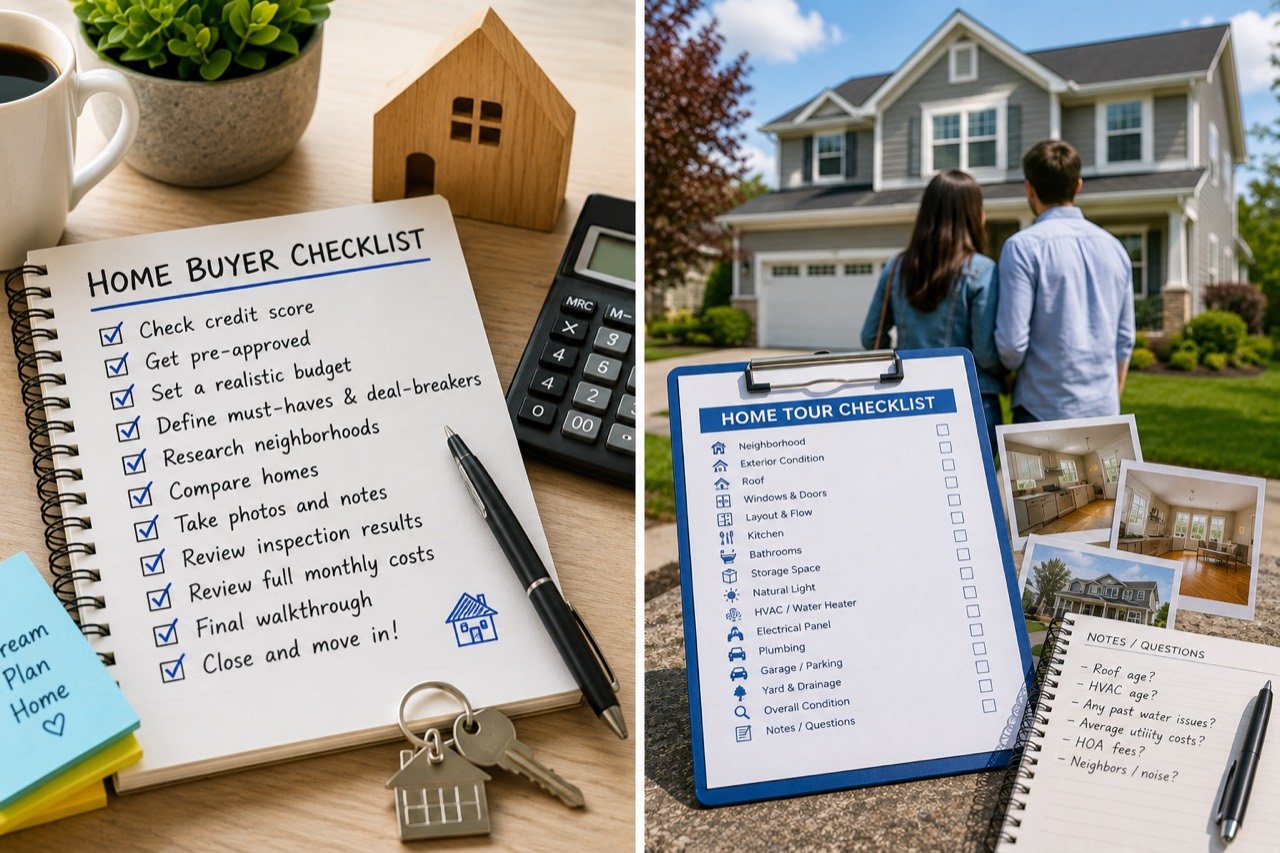
Quick answer
A complete home buyer checklist should cover six stages: financial preparation, neighborhood and property research, touring and comparison, offer strategy, inspection and closing, and first-year ownership planning. The strongest buyers do not only ask whether they can get approved. They ask whether the home still makes sense after the full cost, repair risk, resale risk, and rent-vs-buy alternatives are included.
Use this checklist before you fall in love with a home, not after.
Stage 1: Get financially ready before looking at homes
Check your monthly comfort number
Do not start with the lender’s maximum approval. Start with the monthly payment that lets you live comfortably, save, handle repairs, and sleep at night.
Include:
- Principal and interest.
- Property taxes.
- Homeowners insurance.
- HOA dues.
- PMI if applicable.
- Utilities.
- Maintenance reserve.
- Emergency savings after closing.
Your lender approval is a ceiling. Your comfort number is the real budget.
Review your cash needed to close
Cash needed to close usually includes down payment, lender fees, title and escrow costs, prepaid taxes and insurance, appraisal, inspection, moving expenses, and immediate repairs.
Do not use every dollar for the down payment. A buyer who closes with no reserves is vulnerable to the first repair.
Get pre-approved, not just pre-qualified
A pre-approval does not guarantee final loan approval, but it is stronger than a casual estimate. Ask your lender what documents they reviewed and what could still change.
Stress test your budget
Ask:
- What if insurance is higher than expected?
- What if repairs cost $10,000 in the first year?
- What if one income changes?
- What if rates move before you lock?
- What if HOA dues rise?
If the home only works in the best-case scenario, keep looking.
Stage 2: Research neighborhoods before comparing kitchens
A home is attached to a location. You can renovate a kitchen more easily than you can change a commute, school boundary, traffic pattern, noise source, flood zone, or HOA culture.
Check the location basics
Research:
- Commute at your actual travel times.
- School boundaries if relevant.
- Noise from roads, airports, trains, businesses, or nightlife.
- Flood, fire, storm, or other climate-related risk.
- Local insurance availability.
- Parking and street congestion.
- Nearby planned development.
- Short-term rental or landlord rules if future renting matters.
Compare the property to alternatives
For each home, ask what else your money could buy or rent. This prevents tunnel vision.
A good home buyer checklist should include a comparison step:
- Similar home in same neighborhood.
- Similar price in different neighborhood.
- Similar rent in the area.
- Lower-price home with renovation potential.
- Higher-price home with fewer repairs.
Stage 3: Tour homes with a decision framework
Touring is emotional. That is normal. A checklist helps you notice problems before the house becomes “the one.”
Before the tour
Review:
- List price and price history.
- Days on market.
- Comparable sales.
- Estimated property taxes.
- HOA dues and rules.
- Age of roof, HVAC, water heater, electrical panel, and major appliances.
- Seller disclosures if available.
- Estimated monthly cost.
During the tour
Look for:
- Water stains, musty smells, or drainage issues.
- Cracks in walls, ceilings, foundation, or exterior surfaces.
- Uneven floors or sticking doors.
- Old roof or visible roof damage.
- Old HVAC, water heater, or electrical panel.
- Poor grading or water pooling near foundation.
- Window condition.
- Functional floor plan.
- Storage.
- Natural light.
- Parking.
- Neighboring property condition.
- Noise inside and outside.
After the tour
Do not rely on memory. Score each home immediately.
Use categories:
- Price fit.
- Monthly cost fit.
- Condition.
- Layout.
- Location.
- Resale risk.
- Rentability.
- Repair uncertainty.
- Emotional fit.
The goal is not to remove emotion. It is to make emotion visible next to the numbers.
Stage 4: Decide whether to make an offer
Before making an offer, run the home through four tests:
1. Price test: Is the home supported by recent comparable sales? 2. Payment test: Can you afford the full monthly ownership cost? 3. Rent test: How does ownership cost compare with renting a similar home? 4. Exit test: What happens if you need to sell in three to five years?
If the home fails one test, slow down. If it fails two or more, the deal may need a lower price, stronger inspection protection, seller credits, or a walk-away decision.
Build your offer around evidence
Your offer should consider:
- Comparable sales.
- Days on market.
- Seller motivation.
- Competing offers.
- Appraisal risk.
- Repairs.
- Loan type.
- Desired closing date.
- Inspection strategy.
- Your walk-away number.
A strong offer is not always the highest offer. It is the offer that fits the market and protects your downside.
Stage 5: Use inspection to understand risk, not just renegotiate
The inspection period is not only about finding problems. It is about understanding the home you are buying.
Inspection checklist
Ask about:
- Roof age and condition.
- HVAC age and performance.
- Plumbing leaks or outdated materials.
- Electrical panel and wiring concerns.
- Foundation and structural signs.
- Drainage and grading.
- Sewer or septic condition.
- Water heater age.
- Attic ventilation and insulation.
- Windows and exterior envelope.
- Pest or termite activity.
- Safety issues.
Decide what matters most
Not every issue is a deal breaker. Prioritize health, safety, structural problems, water intrusion, major systems, and expensive near-term replacements.
Cosmetic issues matter too, but they should not distract from larger risks.
Stage 6: Prepare for appraisal, loan approval, and closing
Appraisal
If the appraisal comes in low, you may need to renegotiate, bring more cash, challenge the appraisal, or walk away depending on your contract.
Final loan approval
Avoid major financial changes before closing. Do not open new credit, make large undocumented deposits, change jobs without talking to your lender, or buy furniture on credit.
Final walkthrough
Confirm:
- Agreed repairs were completed.
- Appliances included in the contract remain.
- No new damage occurred.
- Utilities and systems work.
- Seller belongings were removed unless agreed.
- The home is in expected condition.
Stage 7: Plan your first year as a homeowner
The buying process does not end at closing. Your first year should include maintenance planning.
First-month checklist
- Change locks or rekey.
- Set up utilities.
- Locate shutoff valves.
- Save appliance manuals and warranties.
- Create a maintenance calendar.
- Test smoke and carbon monoxide detectors.
- Review insurance coverage.
- Build a repair fund.
First-year checklist
- Service HVAC.
- Clean gutters.
- Inspect roof after storms.
- Check drainage.
- Replace filters.
- Review property tax bill.
- Recheck insurance coverage.
- Track actual monthly costs against your estimate.
How Home Decision Lab helps
Use the interactive Home Buyer Checklist at Interactive Home Buyer Checklist and run a Home Analysis Report at Home Analysis Report before making an offer. If you are still deciding whether to buy or rent, use Rent vs Buy calculator to compare the long-term financial paths.

FAQ
What should I do first when buying a house?
Start with your real monthly budget, cash needed to close, emergency reserves, and lender pre-approval. Do this before touring homes seriously.
What is the most important item on a home buyer checklist?
The most important item is affordability based on the full monthly cost, not just the mortgage payment. The second most important item is understanding condition and repair risk.
How many homes should I see before making an offer?
There is no required number. Some buyers find the right home quickly. The key is to compare alternatives and make the offer based on evidence, not urgency alone.
What should I look for during a home tour?
Look for water signs, foundation issues, roof age, HVAC condition, electrical concerns, layout problems, noise, parking, natural light, storage, and neighborhood fit.
Should I waive inspection to win a house?
Waiving inspection can increase risk. Before considering it, understand the home’s age, condition, repair history, market competition, and your ability to absorb expensive surprises.
What happens after an offer is accepted?
You typically move through inspection, appraisal, loan underwriting, title review, final walkthrough, closing disclosure review, signing, funding, and recording.
Data sources and assumptions used in this article
This article is educational and uses public market context plus example calculations. Numbers should be refreshed before publishing if Home Decision Lab has newer internal data.
- Freddie Mac Primary Mortgage Market Survey context: 30-year fixed-rate mortgage averaged 6.52% for the week reported June 11, 2026.
- FHFA House Price Index context: U.S. home prices were up 1.7% year over year in Q1 2026 and up 0.5% from Q4 2025.
- U.S. Census/ACS housing-cost framing: ownership cost includes more than the mortgage payment, including taxes, insurance, utilities, fees, and other required housing expenses.
- RentCast can be used for static data snapshots where available: rent estimates, value estimates, comps, property records, listings, and local market trend data. Do not expose an API key in public blog code.
Source URLs:
- https://www.globenewswire.com/news-release/2026/06/11/3310694/0/en/Mortgage-Rates-Average-6-52.html
- https://www.fhfa.gov/reports/house-price-index/2026/Q1
- https://www.census.gov/acs/www/about/why-we-ask-each-question/housing/
- https://www.census.gov/newsroom/press-releases/2025/acs-5-year-estimates.html
- https://developers.rentcast.io/reference/rent-estimate-long-term
- https://www.rentcast.io/api
Educational disclaimer
Home Decision Lab is an educational decision-support tool, not a lender, real estate broker, tax advisor, or financial advisor. This article should not be treated as personal financial, legal, lending, investment, or tax advice. Buyers and homeowners should confirm numbers with qualified professionals before making an offer, refinancing, selling, renting, or moving.
Educational only. This is not financial, legal, tax, mortgage, investment, or real estate advice.